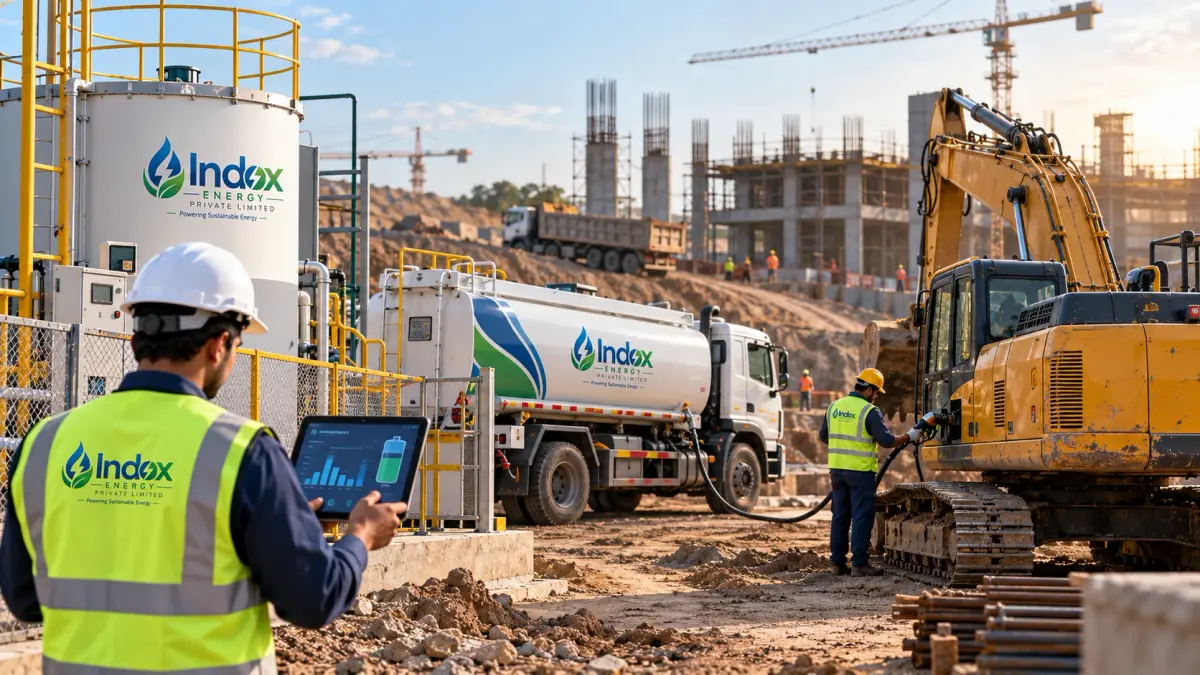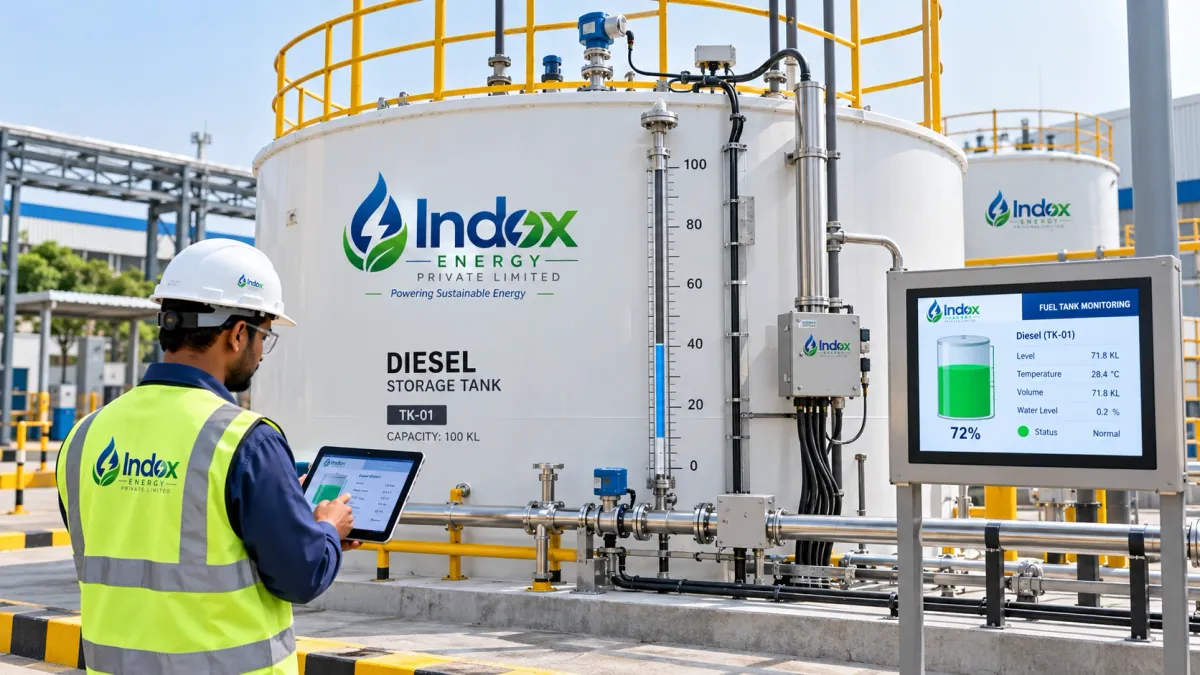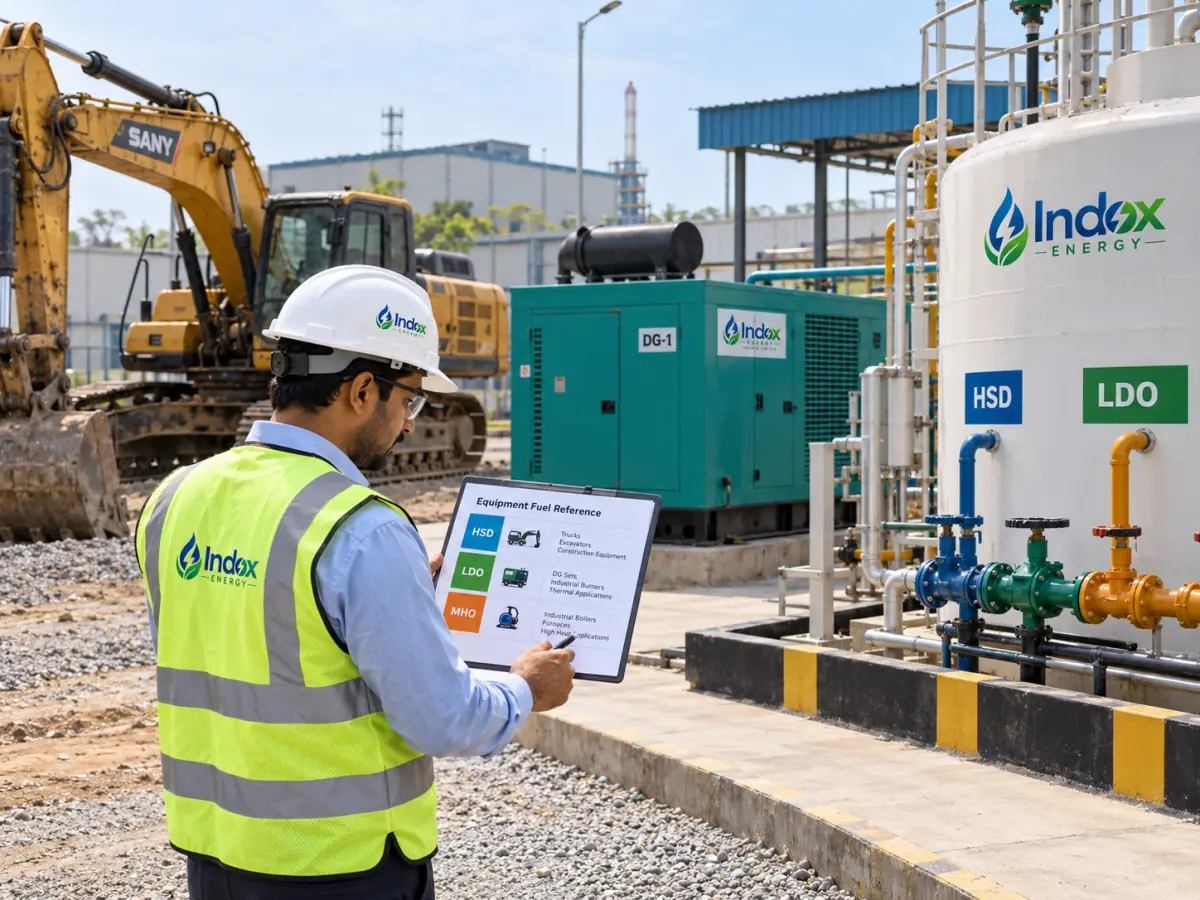
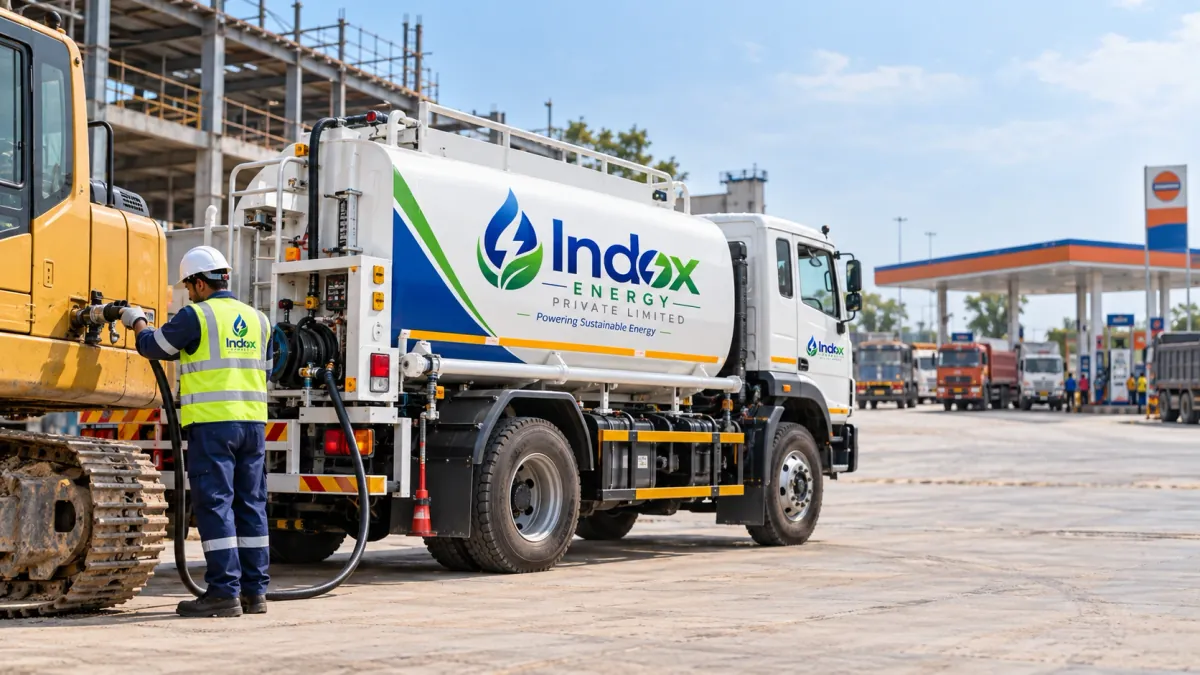
For many businesses, buying diesel means sending a vehicle to the nearest pump with drums or cans, or driving machines there to fill up. It feels cheap because the price per litre is right there on the pump. But the price per litre is only part of what the fuel costs your site.
Doorstep delivery, where fuel is brought to your site and filled into your tank or equipment, changes several of those hidden costs. Whether it works out better for you depends on your site, your consumption and how your team runs today. This article sets out what to compare and how to do the sums for your own operation.
What a pump run actually involves
Before comparing, list what happens when fuel is bought at a pump. On a typical site it can include:
- A vehicle and driver taken off other work for the round trip.
- Drums or cans loaded, transported and unloaded.
- Machines standing idle while they wait for fuel, or while they travel to the pump themselves.
- A bill or receipt that someone has to carry back and file.
- Fuel transferred from drums into tanks or machines by hand.
Each of these has a cost, even if it never shows up as a line item called "fuel".
Doorstep delivery and pump purchase compared
The table below compares the two approaches on the points that usually matter to site and operations managers. It is deliberately qualitative: the actual difference depends on your location, volumes and how the site is run.
| Factor | Buying from a pump | Doorstep delivery |
|---|---|---|
| Convenience | Someone has to arrange transport, containers and time for each trip | Fuel is booked and arrives at the site |
| Downtime | Machines may wait for fuel or travel to fill up | Machines can keep working; fuel comes to them |
| Records | Receipts carried back by hand, easy to lose or misplace | Delivery documents issued for each drop |
| Control | Fuel in open containers passes through several hands | Fuel goes straight from the bowser into the tank or machine through a meter |
| Handling | Manual transfer between drums, cans and tanks | Filled directly, fewer transfers |
| Planning | Bought when someone notices stock is low | Deliveries can be scheduled against consumption |
How to calculate the cost for your site
You can build a simple comparison from numbers you already have. Work through one typical month.
Step 1: The fuel itself
Note the litres you use in a month and the rate you pay at the pump. Ask for a delivered rate for the same quantity and location. Keep these as your two base figures.
Step 2: Transport and labour
For pump purchases, estimate how many trips you make, how long each trip takes and the cost of the vehicle and people involved. Include fuel used by the vehicle on the trip.
Step 3: Downtime
Estimate the hours machines or crews spend waiting for fuel or travelling to fill up. Put a value on an hour of that equipment or crew being idle. This is often the largest hidden cost, and the easiest to overlook.
Step 4: Losses and handling
Compare the quantity bought with the quantity that reached your tanks and machines. Any consistent gap, from spillage, evaporation in open containers or unrecorded draws, is part of the cost of the pump route.
Step 5: Administration
Add the time spent collecting receipts, entering them in registers and reconciling them at month-end.
Put the totals side by side:
| Line | Pump purchase | Doorstep delivery |
|---|---|---|
| Fuel (litres × rate) | Your figure | Your figure |
| Transport and labour | Your figure | Usually minimal |
| Downtime | Your figure | Your figure |
| Losses and handling | Your figure | Your figure |
| Administration | Your figure | Your figure |
| Total per month | Sum | Sum |
The cheapest litre is the one that reaches the machine, on time, with a record.
When doorstep delivery tends to make sense
Delivery is usually worth a closer look when:
- Your site is far from the nearest pump, or access is slow.
- Several machines or DG sets need fuel regularly.
- Downtime is expensive, such as on projects with tight schedules.
- You need clear delivery records for accounts or audits.
- Fuel in drums and cans has been hard to control.
Buying at the pump can still suit very small, occasional needs where transport is easy and machines are nearby. Eligibility for delivery also depends on your site, location and applicable regulations, so check with your supplier before planning around it.
Questions to ask a delivery supplier
- Where does the fuel come from, and is it from authorized sources?
- Is every delivery metered, and do I receive delivery documents?
- Is the invoice GST-compliant?
- Can deliveries be scheduled around my shifts and site access?
- Can the bowser fill machines directly, or only storage tanks?
Closing thoughts
The real comparison between doorstep delivery and pump purchase is not rate against rate. It is the full cost of getting fuel into your machines, including time, transport, losses and paperwork. Work through the numbers for one month and the answer for your site usually becomes clear.
To see how site delivery works in practice, IndoX Energy's doorstep delivery page sets out the process step by step.
Share this article
IndoX Energy Team
Editorial
Practical notes for site and operations managers, written by the IndoX Energy team.