Most diesel tanks on Indian sites are still checked the old way: someone climbs up, drops a dipstick, reads the wet mark and writes a number in a register. It works, up to a point. But it only tells you the level at the moment someone checked, and it depends entirely on that person doing it carefully and honestly.
Automated tank gauging, usually shortened to ATG, replaces the dipstick with a sensor that measures the level for you, all the time. This article explains what ATG is, what it tells you, and how to decide whether it is worth having on your site.
What ATG is
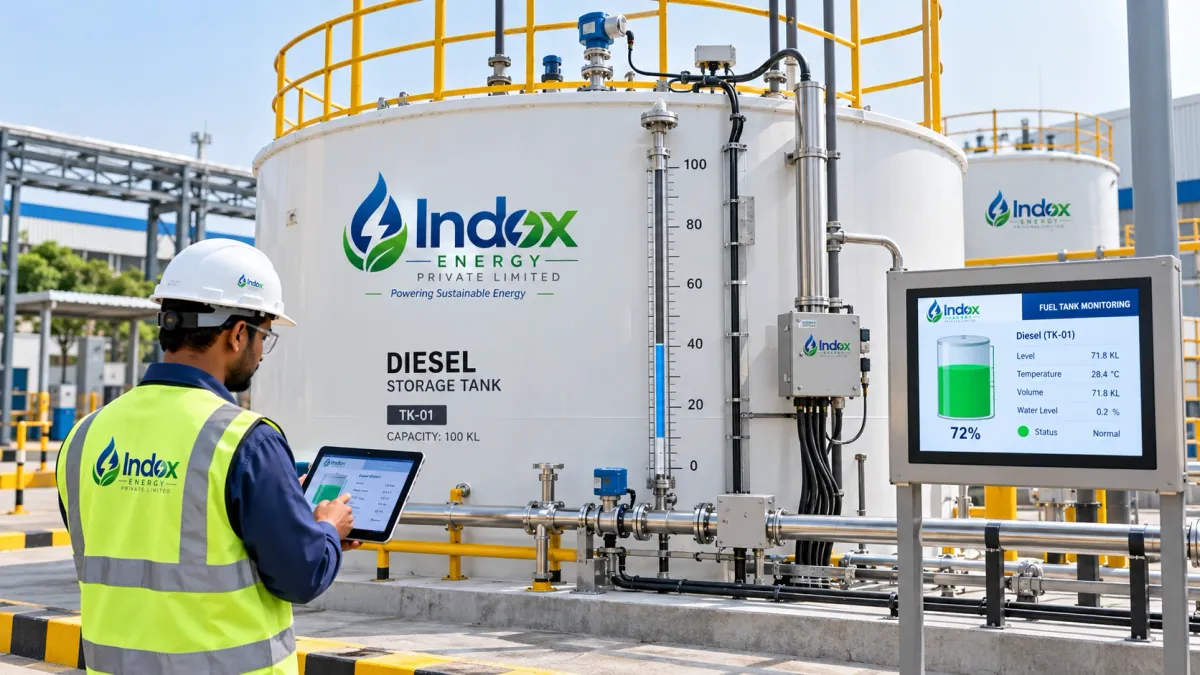
An automated tank gauge is a measuring system fitted to a fuel tank. A probe inside the tank senses the fuel level and passes the reading to a console or a connected device. Many systems can also sense temperature and detect water at the bottom of the tank, depending on the probe used.
The readings can be shown on a local display, sent to a web dashboard, or pushed to a mobile app, so the level of the tank can be checked without anyone going near it.
What an ATG tells you
A single level reading is useful. A continuous record of readings is far more useful, because it shows how the level changes over time.
Current stock
The most obvious benefit: you know how much fuel is in the tank right now, without a site visit.
Receipts and draw-downs
When fuel is delivered, the level rises; when fuel is issued, it falls. A continuous record lets you see each event and compare it with delivery documents and issue registers.
Unusual changes
A drop in level at a time when nothing should be running, such as overnight, stands out immediately. So does a delivery that raises the level by less than the invoice suggests.
Planning information
Over weeks, the readings build a picture of how fast the site uses fuel, which helps plan deliveries before stock runs low.
Manual dipping and ATG compared
| Point | Manual dipping | Automated tank gauging |
|---|---|---|
| How often you know the level | Only when someone checks | Continuously |
| Effort | Someone has to access the tank each time | No site visit needed to read the level |
| Accuracy | Depends on the person and the method | Consistent, once installed and set up correctly |
| History | Whatever was written in the register | A recorded trail of readings over time |
| Unusual drops | Noticed late, if at all | Visible soon after they happen, and can trigger alerts |
| Remote sites | Hard to supervise | Readable from a dashboard or phone |
A dipstick tells you where the level is. An ATG tells you what happened to it.
Does your site need one?
ATG is not essential for every tank. It tends to pay back its effort where visibility matters most. Work through these questions:
- Do you have tanks at sites that managers cannot visit every day?
- Do you run DG sets or equipment where running out of fuel causes real disruption?
- Have you seen unexplained differences between deliveries, issues and stock?
- Does someone spend significant time dipping tanks and compiling registers?
- Do you need clear fuel records for accounts, audits or clients?
- Are you planning to add digital fuel monitoring or reporting later?
If you answered yes to two or more, ATG is worth a closer look. A single small tank that someone checks daily and that has never shown a discrepancy may be fine with manual dipping for now.
What to think about before installing
Tank type and condition
The probe has to suit the tank. Existing tanks can often be fitted, but it depends on their design, access points and condition. A site check is the right first step.
How you want to see the data
Decide whether a local display is enough, or whether you want readings on a dashboard or phone, and who should receive alerts.
Connection at the site
Remote readings need a way to send data from the site. Discuss what is available at your location.
Safety and approvals
Fuel storage and any work on it must follow applicable safety requirements and regulations. Work should be done by qualified people and coordinated with the site's own safety officer.
Closing thoughts
Automated tank gauging turns a tank from something you check occasionally into something that reports on itself. For sites with remote tanks, critical equipment or a history of unexplained losses, that visibility is often worth having. For a small, closely watched tank, manual dipping may still do the job.
If you are weighing up a new tank with monitoring built in, IndoX Energy's smart storage tank page explains what is included.
Share this article
IndoX Energy Team
Editorial
Practical notes for site and operations managers, written by the IndoX Energy team.