
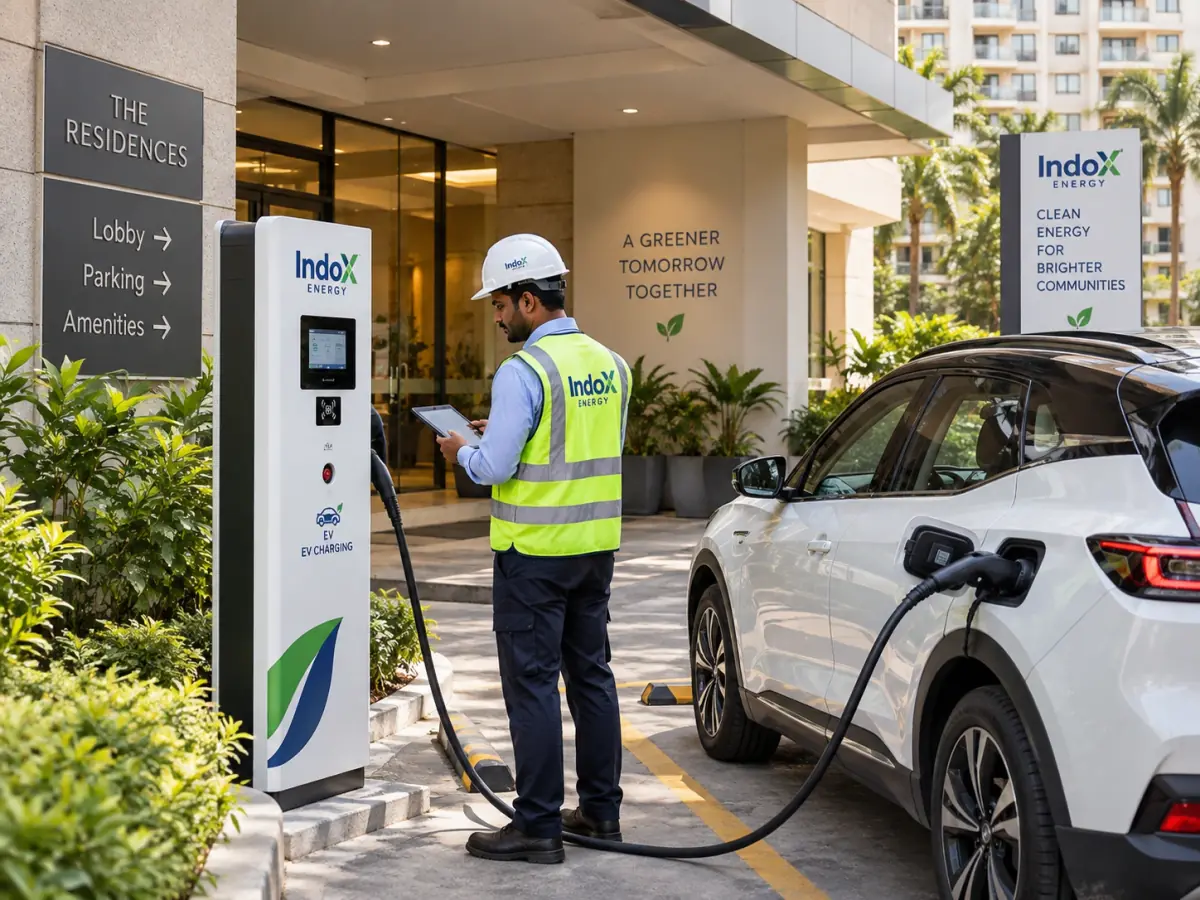
More guests are arriving at hotels in electric cars, and more residents in housing societies are asking where they can charge. For a hotel, a charger can be a reason for a guest to choose you. For a society, it can settle a question that otherwise comes up at every committee meeting.
Setting up a charger is not complicated, but it does involve a few steps that are easy to underestimate, especially around electrical supply and approvals. This guide walks through the process from start to finish, so you know what to expect and what to prepare.
Decide what you need the charger for
Step 1 happens before anyone visits the site: be clear about who will use the charger and how.
- Guests or visitors: often park for a few hours or overnight, as at hotels and restaurants.
- Residents: typically charge overnight in their own or shared parking.
- Staff or fleet vehicles: may need charging between shifts or at the end of the day.
How long vehicles stay parked is the single most useful piece of information. It shapes the type of charger that makes sense.
Survey and planning
Step 2: Site survey
A proper survey is the foundation of a good installation. During the survey, the installer typically checks:
- The parking layout and where chargers could go.
- Vehicle access and how drivers will approach the charger.
- The existing electrical supply and distribution at the property.
- Cable routes from the supply point to the charger locations.
- Any civil work needed, such as foundations or trenching.
Have your electrical drawings, recent electricity bills and details of any planned building work ready. They make the survey faster and more accurate.
Step 3: Load and electrical planning
This is where the site's electrical capacity is matched to the chargers you want. The planner works out whether the existing supply can support the chargers, or whether upgrades are needed, and designs the cabling and protection.
For societies and hotels, this step often decides how many chargers are practical right now, and how many can be added later. Any upgrade to the supply is subject to the local electricity provider and applicable regulations.
Most of the decisions that matter are made before a single charger is installed.
Approvals and paperwork
Step 4 is often the slowest. Depending on your location and the scale of the installation, approvals may be needed from the building management, the society committee, the electricity provider or other authorities. Requirements vary, so confirm them early and build the time into your plan.
For housing societies, agree internally on practical points before work starts:
- Who can use the chargers, and how access is managed.
- How electricity use will be measured and billed to users.
- Where chargers go in shared or allotted parking.
Installation and commissioning
Step 5: Civil and electrical work
Once the plan is approved, the physical work begins: foundations or mounting points, cable routes and electrical works to the planned design. On an operating hotel or society, schedule this to keep disruption to guests and residents low, and keep areas safely cordoned off while work is in progress.
Step 6: Installation
The chargers are mounted, connected and configured. This includes setting up how users will start and pay for a charging session, for example by RFID card, QR code or a digital payment option, depending on the setup chosen.
Step 7: Testing and commissioning
Each charger is tested before it goes into service, to confirm it works correctly and safely. Commissioning should include a handover: how the chargers work, who to call for support and how to see usage.
Step 8: Maintenance and support
A charger is equipment that people rely on. An annual maintenance contract (AMC) covers scheduled checks and support when something needs attention. A monitoring platform, where included, shows charger status and usage so problems are spotted early.
The process at a glance
| Step | What happens | What you prepare |
|---|---|---|
| Needs | Decide who uses the charger and for how long | Expected users and parking patterns |
| Survey | Parking, access and supply checked on site | Electrical drawings and bills |
| Planning | Load worked out, cabling and protection designed | Decisions on number of chargers |
| Approvals | Permissions obtained as required | Committee or management sign-off |
| Works | Civil and electrical work completed | Access and a safe work area |
| Installation | Chargers mounted and configured | Choice of access and payment method |
| Commissioning | Chargers tested and handed over | A contact person for handover |
| Maintenance | AMC and monitoring | Agreement on support arrangements |
Closing thoughts
Setting up an EV charger at a hotel or society is a sequence of sensible steps: understand your users, survey the site, plan the electrical load, get the approvals, then install, commission and maintain. Getting the early steps right makes everything after them simpler, subject to site conditions, approvals and applicable regulations.
If you would like a survey of your property, IndoX Energy's EV charging page explains how it works.
Share this article
IndoX Energy Team
Editorial
Practical notes for site and operations managers, written by the IndoX Energy team.