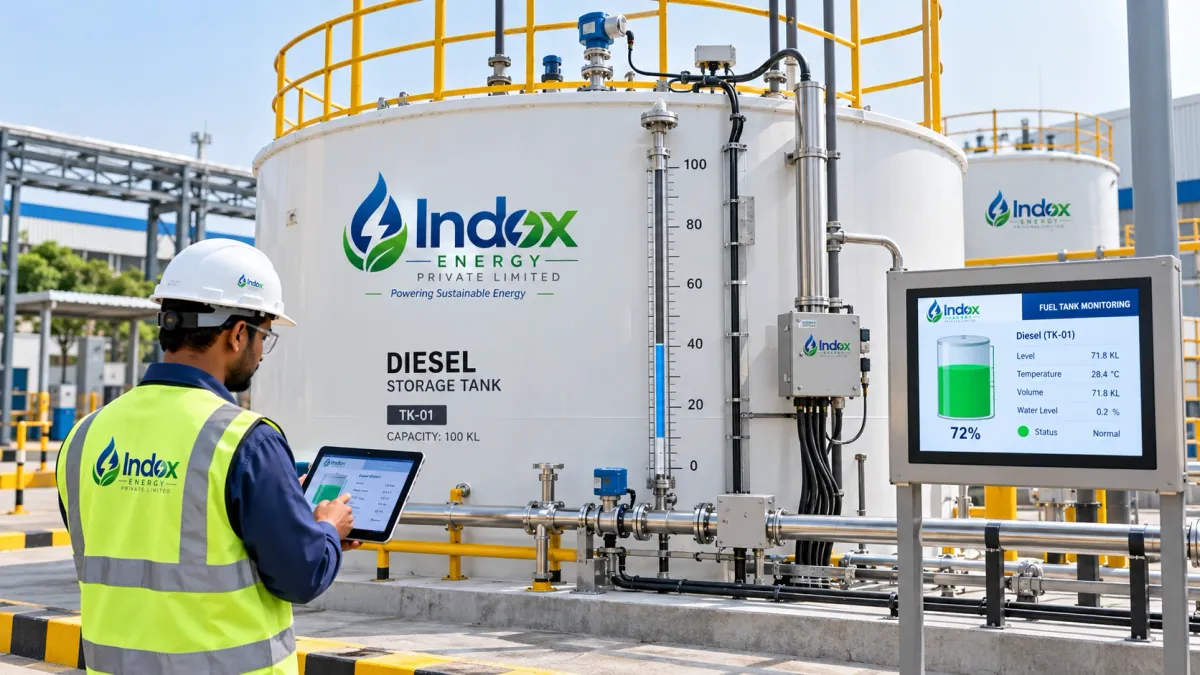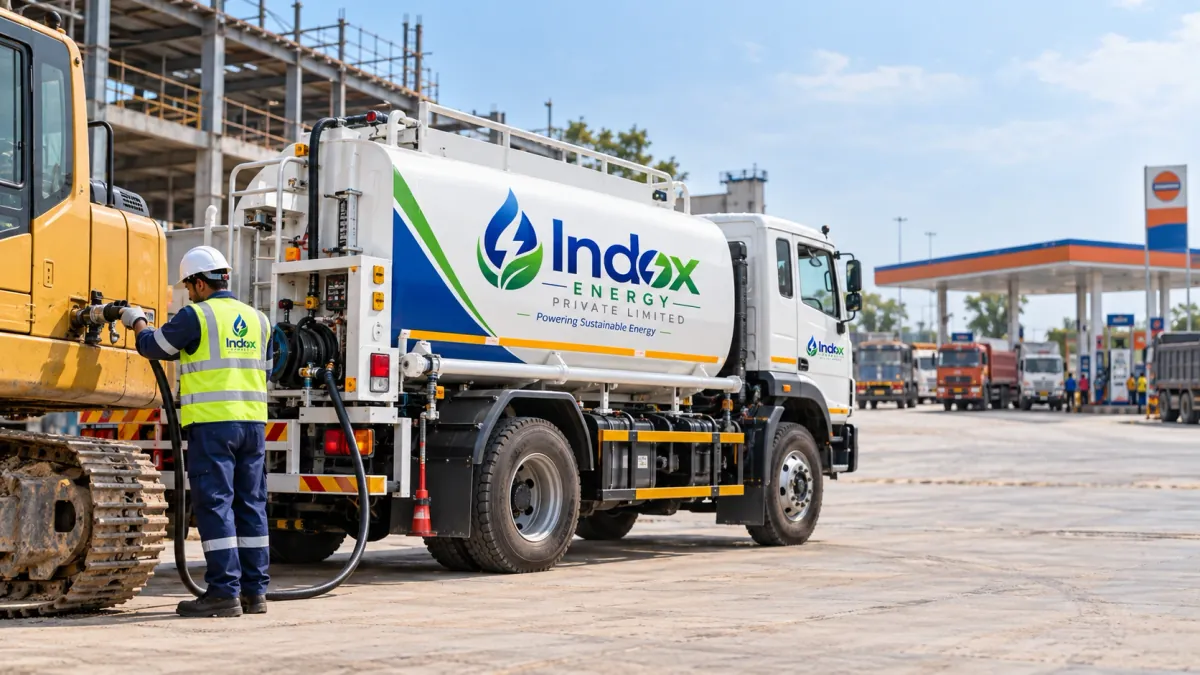
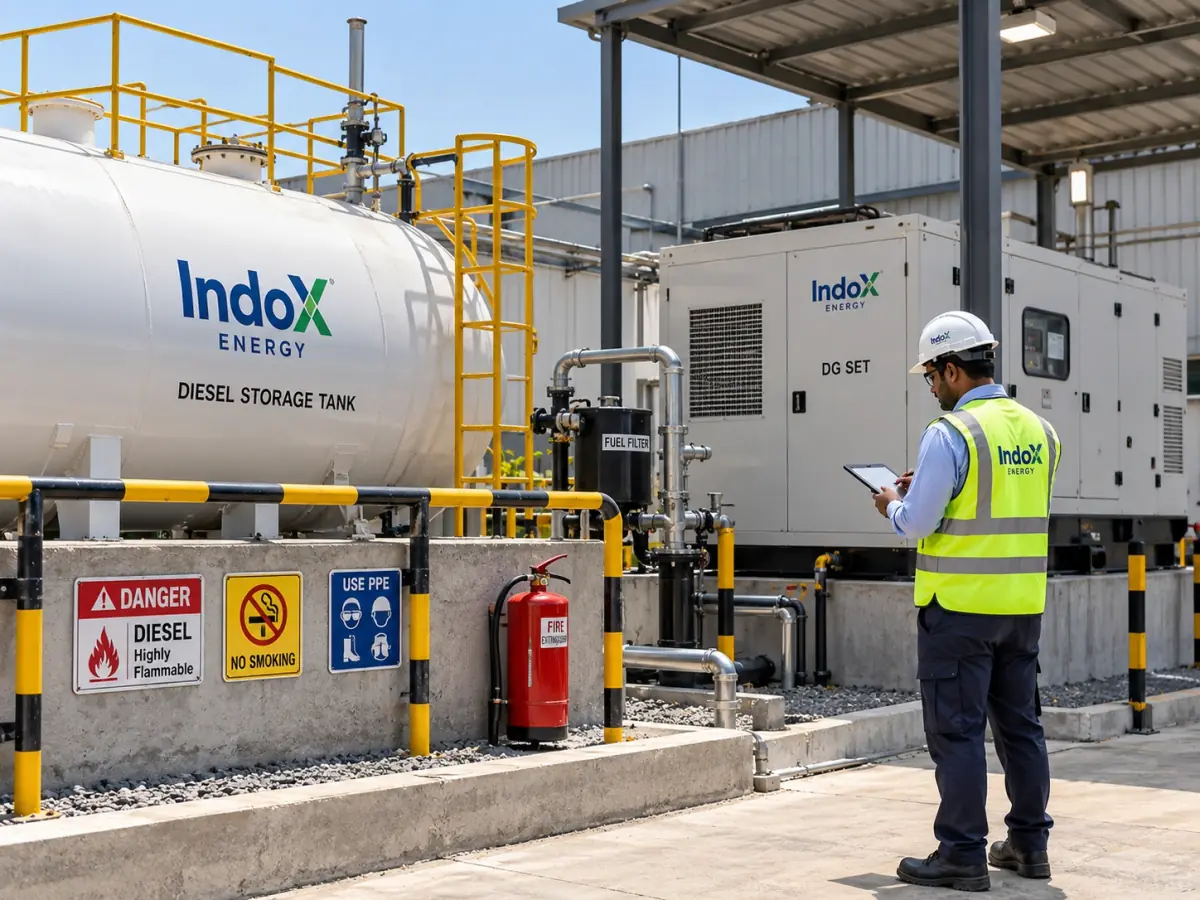
Diesel is part of daily life on most sites: it runs the DG set when the grid fails, keeps machines moving and sits in a tank somewhere on the premises. Because it is so familiar, it is easy to stop treating it with care. Most fuel incidents on sites come from small lapses repeated over time: a spill left uncleaned, a fire extinguisher nobody has checked, a delivery made without anyone watching.
This article is a general, practical checklist. It is not a substitute for the rules that apply to your site. Always follow applicable regulations and your site's own safety officer, whose instructions take priority over anything here.
Storage and fire safety
Storage area basics
Where and how fuel is stored does most of the work of keeping it safe.
- The tank or storage area is in a location approved for fuel storage on your site.
- The area is well ventilated and kept clear of rubbish, dry vegetation and combustible material.
- Clear "No smoking" and "No naked flames" signs are posted and respected.
- The tank is in good condition, with no visible leaks, rust patches or damaged fittings.
- Secondary containment, such as a bund or tray, is in place where required, and kept free of water and debris.
- Tank openings and fill points are closed and locked when not in use.
- Access to the storage area is limited to trained, authorized people.
Fire safety
Prevention matters most, but you also need to be ready if something goes wrong.
- Suitable fire extinguishers are available near the storage area and the DG set.
- Extinguishers are inspected on the schedule your safety officer sets, and the inspection is recorded.
- Staff who work near fuel know where the extinguishers are and how to use them.
- Emergency contact numbers are displayed where people can see them.
- There is a clear route to leave the area in an emergency.
Most fuel incidents come from small lapses repeated over time, not from one dramatic mistake.
Deliveries and refuelling
Receiving deliveries safely
Deliveries are one of the busiest moments for fuel on site. A short routine helps keep them safe and accurate.
| Before the delivery | During the delivery | After the delivery |
|---|---|---|
| Confirm the tank has space for the quantity ordered | A trained person from the site is present throughout | Close and lock the fill point |
| Clear the vehicle's route and parking spot | The delivery vehicle's engine is off where required | Check for spills and clean them up promptly |
| Keep ignition sources away from the area | Watch the meter and the tank level | Record the quantity received against the delivery documents |
| Have spill material ready | Stop the delivery if anything looks wrong | Report any discrepancy the same day |
Fuelling DG sets
DG sets often run unattended, which makes good habits at refuelling time especially important.
- Follow the manufacturer's instructions for refuelling, including whether the set must be switched off.
- Use the correct fuel type specified for the DG set.
- Use proper dispensing equipment rather than open containers, where possible.
- Avoid overfilling; leave space as the manufacturer recommends.
- Wipe up drips and spills straight away.
- Record each refuel with the date, quantity and the person responsible.
Spills and leaks
Even careful sites have the occasional spill. What matters is dealing with it quickly and correctly.
- Keep spill kits or absorbent material near storage and refuelling points.
- Contain the spill, stop the source if it is safe to do so, and keep people away.
- Dispose of used absorbent material as your site rules and applicable regulations require.
- Investigate the cause and fix it, whether it is a worn hose, a loose fitting or a rushed procedure.
- Report significant spills to your safety officer and follow their instructions.
Records, training and responsibility
Records and routine checks
Safety depends on routine as much as on equipment. Keep a simple log that covers:
- Daily visual checks of the tank, fittings and surrounding area.
- Delivery records with quantities received.
- Refuelling records for the DG set and equipment.
- Fire extinguisher inspections.
- Any spills, leaks or near misses, and what was done about them.
Review the log regularly with the people responsible. Patterns, such as repeated small spills at the same point, often point to a fix that is easy to make.
Training and responsibility
Name who is responsible for fuel safety at each site, and make sure everyone who handles fuel knows the basics: where the extinguishers are, what to do in a spill and who to call. Refresh this whenever staff change.
Closing thoughts
Fuel safety on site comes down to a few steady habits: store fuel properly, keep fire equipment ready, stay present during deliveries, refuel carefully and write things down. Use this checklist with your safety officer to build a routine that fits your site and the rules that apply to it.
You can read how IndoX Energy approaches safe sourcing, transport, storage and dispensing on our Quality & Safety page.
Share this article
IndoX Energy Team
Editorial
Practical notes for site and operations managers, written by the IndoX Energy team.